The government’s legal solicitor trainee scheme is open now! Please take a look if you’re interested in working within the government. There are roles available within the following departnemts: legal, commercial, HMRC, NCA, and the Competition and Markets Authority! The application deadline is the 18th June 2021, so get going.
Follow the link below for more information and how to apply:
M&S and supermarket competitor, Aldi are currently at war over a popular copyrighted figure: Colin the Caterpillar. As you may well know, Colin is the much loved chocolate log roll cake decorated like a cartoon caterpillar. Lauched 30 years ago, remaining largely unchanged since 2004, it has become a birthday icon.
Aldi, the German origin, supermarket chain recently released their own version of Colin, coining the name ‘Cuthbert’. The cake is being sold across stores for a fraction of the price of the original.
M&S have since launched an intellectual property claim against Aldi regarding the look-alike cake. M&S representatives have spoken to the similarity, insinuating that Aldi are potentially trying to ride on the coat tails of Colin the Caterpillar’s reputation. Trying to protect the accumulated reputation that is associated with Colin and his seasonal friends; being one of freshness, quality, and value.
Cuthbert was taken off of the shelves in late Febuary, only to be reintroduced with a snazzy new packaging, fitting for the #freecuthbert movment that has been taking Twitter by storm.
All this attention has brought to light the startling amount of Colin copy-cats. Supermarket chain, Sainsburys has a similar looking caterpillar cake called Wiggles.
(Colin the Caterpillar vs Cuthbert, Curly and Wiggles: we decide which tastes best. ByPip Sloan)
In fact most supermarket chains have developed their own versions of Colin. Some taking more of an original approach with their design rather than cutting it quite close to the original.
As of today Aldi’s latest post to Twitter, it seems they’re rather keen to squash this beef. With a new tweet addressing their wishes to release a limited edition Cuthbert and donating the proceeds of sale to cancer charities. Urging M&S to raise money for charity and not lawyers. It might be a desperate effort to persuage their competitor to move past the suit, but it does raise some questions as to next steps. Will M&S continue on with their legal persuits?
This ‘candid’ response seems to imply that the battle is far from over. Neither seem to be conceeding.
For now, the general public is eagerly sitting, waiting for more information, while enjoying the social media outreach from not only Aldi, but all the large supermarket chains.
Feel free to leave a comment bellow with your thoughts on the matter, whether you think this will make it to trial, if it does, what sort of justice M&S might seek to enforce.
To follow the latest news; use the #FreeCuthbert on twitter!
Application deadlines end on the 11th April 2021. So be quick! It seems like an exciting opportunity for all those who want to enter into the real of law and media.
Among the many things that we are missing over this lockdown period, going to the cinema is definitely high on my list. As an avid cinemaphile I can’t wait to get back to the smell of popcorn.
As many of us know, the justice system is struggling to cope with an overwhelming backlog of cases. Struggles around social distancing for Juries, courts having to close, and staffing issues have put a strain on our already fragile system. In August of 2020 it was believed that some 750 outstanding High Court cases were still to be heard in Scotland. Access to swift and proper justice is a human right, and ought to be upheld even during a pandemic.
So what if I told you that instead of seats being filled to watch the long-witheld James Bond installment, Juries are now trading in the court benches and courtrooms for the comfort of that cinema experience. Jurors who would usually be sitting in the same seats to watch Tenet, are actually watching courtcases remotely instead.
With the increased uptake in remote technology platforms like Zoom, Juries are able to witness court preceeding happen in real-time from a in a socially distanced capacity – on a 50ft screen. Jurors are based in screens watching the judge and both legal teams who are continuing to work from the courthouse.
As recently as last week Cinema chain ‘Vue’, in their Shiprow site in Aberdeen, Scottland hosted a High Court trial. Other chains such as ODEON are also part of this initiative and have been since October. Around £5.5 million is said to being put into this initiative across Scotland. This features the implimentation of new high-tech cameras allowing for full backwards and forwards coverage.
At the moment, cinema venues remain empty, most not set to open until Summer time. Multiplexes with tens of rooms, thousands of seats are being wasted, and so are the potential opportunities. It’s incredible to see the Scottish Courts and Tribunal Service usher in such initiative and even better to hear their plans for branching out.
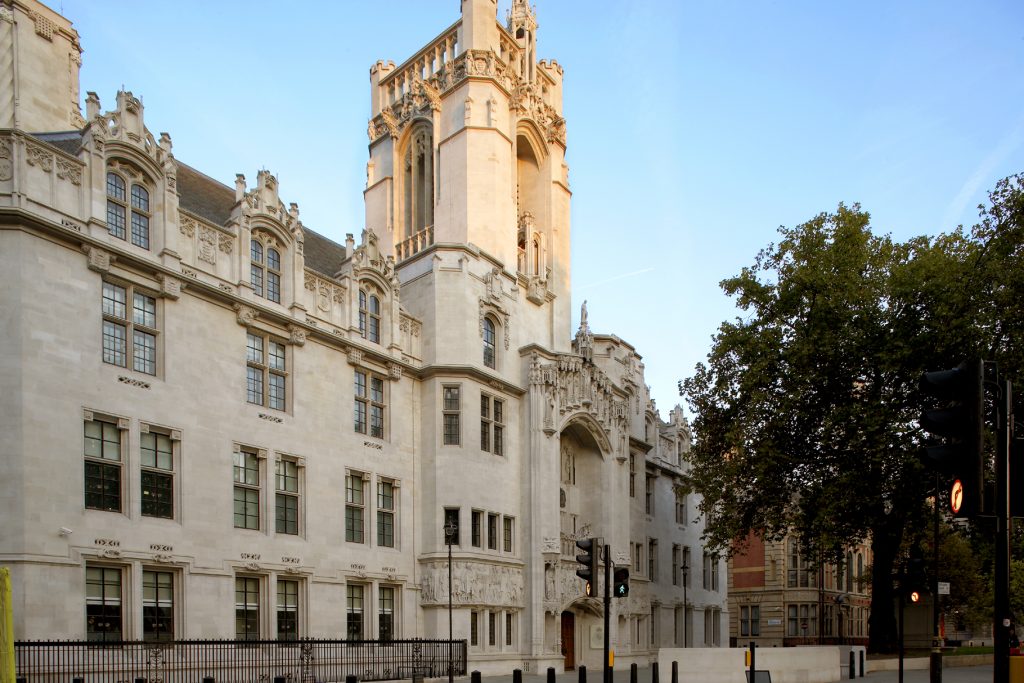
The judgment emphasises five aspects of the findings made by the employment tribunal which justified its conclusion that the claimants were working for and under contracts with Uber [93].
□ First, where a ride is booked through the Uber app, it is Uber that sets the fare and drivers are not permitted to charge more than the fare calculated by the Uber app. It is therefore Uber which dictates how much drivers are paid for the work they do [94].
□ Second, the contract terms on which drivers perform their services are imposed by Uber and drivers have no say in them [95].
□ Third, once a driver has logged onto the Uber app, the driver’s choice about whether to accept requests for rides is constrained by Uber [96]. One way in which this is done is by monitoring the driver’s rate of acceptance (and cancellation) of trip requests and imposing what amounts to a penalty if too many trip requests are declined or cancelled by automatically logging the driver off the Uber app for ten minutes, thereby preventing the driver from working until allowed to log back on [97].
□ Fourth, Uber also exercises significant control over the way in which drivers deliver their services. One of several methods mentioned in the judgment is the use of a ratings system whereby passengers are asked to rate the driver on a scale of 1 to 5 after each trip. Any driver who fails to maintain a required average rating will receive a series of warnings and, if their average rating does not improve, eventually have their relationship with Uber terminated [98 – 99].
□ A fifth significant factor is that Uber restricts communications between passenger and driver to the minimum necessary to perform the particular trip and takes active steps to prevent drivers from establishing any relationship with a passenger capable of extending beyond an individual ride [100].
Taking these factors together, the transportation service performed by drivers and offered to passengers through the Uber app is very tightly defined and controlled by Uber. Drivers are in a position of subordination and dependency in relation to Uber such that they have little or no ability to improve their economic position through professional or entrepreneurial skill. In practice the only way in which they can increase their earnings is by working longer hours while constantly meeting Uber’s measures of performance [101].
The Supreme Court considers that comparisons made by Uber with digital platforms which act as booking agents for hotels and other accommodation [103 – 108] and with minicab drivers [109 – 117] do not advance its case. The drivers were rightly found to be “workers” [119].
What does this mean?
Well Uber drivers being classed as employees may inevitably mean they will enjoy the same rights as those not working in the ride-share industry. This includes earning a minimum wage and holiday pay entitlements.
Under these new financial obligations, Uber will inevitably increase customer fares to cover the burden. As well as limit further the flexible nature of working when you want under Uber’s current business model.
Could this set a precedent that will apply to other casual workers, working for companies such as Bolt and Lyft?
What will this mean for for future of Uber, in an already hostile climate? Facing challenges with Black-cab agencies and tough regulations set by TFL. Will Uber persevere and change their practice or will they admit defeat? Some 40,000 drivers in the UK and millions of consumers would like to know.
For lots of us, exams are looming. You might be stressed with how much work you have but find little motivation to actually sit down and begin to tackle this mountain. For some, this can make pre-exam stress worse. By ‘some’, let me tell you, I am also included.
As an avid career crammer, I’ve come to the realisation that my Legal Practice Course exams are not going to sit themselves. For the most part, my cramming bows down to a serial lack of motivation and for those of you like me, the urge to procrastinate is incredibly enticing.
So, let me give you some pointers on how to keep the flow and manage those periods of ‘meh’.
Chose a method that works for you. Be it flash cards, mind-maps, lists, thought clouds, or memory games. By experimenting with different ways to study, you will find a way to encourage yourself to revise. For me, I settled on mind-maps. They’re easy to make, you can include as little or as much information as possible, you can add pictures, colour, and make important information pop in a way that’s attractive to you! I will definitely be sharing my notes with you guys to help anyone who needs them. Just head to the Gallery.
Reward yourself! Given that most aspiring solicitors don’t qualify until the ripe ole’ age of 29, we can often feel like it’s a distant achievement that can’t and won’t bother us now. Well…that’s not the case. By treating yourself often; with a good book, your favourite movie, taking a long hot bubble bath – you get the picture – we can settle our need for automatic gratification. You put in a few solid hours, you get a snack reward. You have a dedicated week, take Sunday off and put your feet up. You’e more likely to get back on the horse if you know there’s some sort of appreciation for the effort in the here and now!
Treat yourself often. That is sometimes something we forget to do in the thick of it. We do deserve to relax and appreciate life. Working too long and too hard without respite can cause metal fatigue or burn-out! Keep a look out for further information on how to avoid burn-out and what to do if you suspect that you’re spent. You always deserve that cup of tea.
If you’re struggling reach out to others. Take some time to appreciate where you are and what steps you can take to get back on track. Most university professors can be found at the end of an email. Trust me. Just ask for help. They aren’t here to berrate you or make you feel useless, their job is to teach you. Don’t waste this precious resource. Likewise, it might be wise, if you haven’t already, to set up a class group chat over social media! You might feel more comfortable asking questions this way because they’re your peers.
Don’t be hard on yourself. Nothing knocks confidence like self doubt and feelings of inadequacy. If you’ve not passed a test or didn’t achieve the score you wanted, take it easy. Most universities offer the chance to resit (with or without a fee). There’s no shame in needing a second chance. Nobody is perfect. Yes, even that one person in your class who seems to know everything and is always prepared.











 Legal Together
You must be logged in to post a comment.